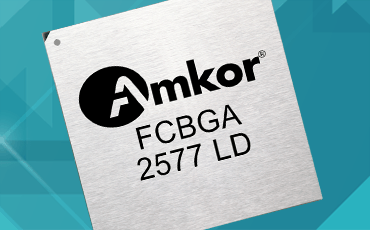
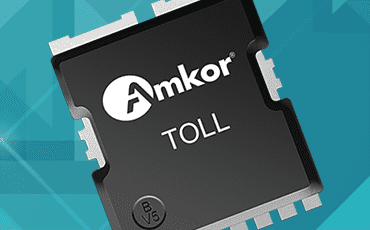
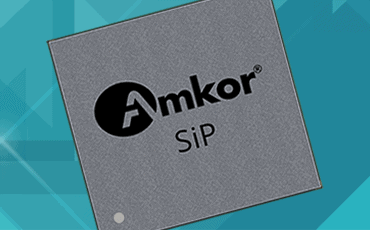
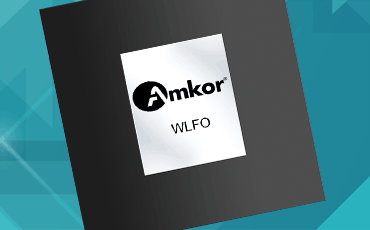
Demand for flip chip packaging & flip chip interconnect technology is being driven by a number of factors from all corners of the silicon industry. To support this demand, Amkor is committed to being the leading provider of Flip Chip in Package (FCiP) technology. By partnering with proven industry leaders, Amkor has brought high volume flip chip packaging and assembly to the subcontract market. Since being the first OSAT to provide FCiP solutions in 1999, Amkor has continued to introduce innovative packaging solutions utilizing Flip Chip interconnect, and offers the broadest range of FCiP solutions on the market. Super Flip Chip (SuperFC®), Flip Chip BGA (FCBGA), fcLBGA, fcLGA, Flip Chip Molded BGA (FCmBGA), FlipStack CSP, and Flip Chip CSP (fcCSP) are qualified and are in production. Flip Chip production capability exists in our Philippines, Korea, Taiwan, and China factories. Wafer Bumping, Wafer Level Packaging (WLP), and Flip Chip packaging solutions are qualified in lead-free options.
Flip Chip (FC) is not a specific package (like
SOIC), or even a package type (like
BGA). Flip Chip describes the method of electrically connecting the die to the package carrier. The package carrier, either substrate or leadframe, then provides the connection from the die to the exterior of the package. In "standard" packaging, the interconnection between the die and the carrier is made using wire. The die is attached to the carrier face up, then a wire is bonded first to the die, then looped and bonded to the carrier. Wires are typically 1-5 mm in length, and 15-35 μm in diameter. In contrast, the interconnection between the die and carrier in flip chip packaging is made through a conductive "bump" that is placed directly on the die surface. The bumped die is then "flipped over" and placed face down, with the bumps connecting to the carrier directly. A bump is typically 60-100 μm high, and 80-125 μm in diameter. The flip chip connection is generally formed one of two ways: using solder or using conductive adhesive. By far, the most common packaging interconnect is solder.
Current solder options are: Eutectic Sn/Pb or lead-free (98.2% Sn, 1.8% Ag) compositions. The solder bumped die is attached to a substrate by a solder reflow process, very similar to the process used to attach BGA balls to the package exterior. After the die is soldered, underfill is added between the die and the substrate.
Underfill is a specially engineered epoxy that fills the area between the die and the carrier, surrounding the solder bumps. It is designed to control the stress in the solder joints caused by the difference in thermal expansion between the silicon die and the carrier. Once cured, the underfill absorbs the stress, reducing the strain on the solder bumps, greatly increasing the life of the finished package. The chip attach and underfill steps are the basics of flip chip interconnect. Beyond this, the remainder of package construction surrounding the die can take many forms and can generally utilize existing manufacturing processes and package formats.
More recent package solution introductions have begun to utilize an alternative flip-chip interconnect technique called TCNCP (Thermal Compression Non-Conductive Paste). Rather than a two step solder-then-underfill process, TCNCP accomplishes both in a single step. Solder tipped, non-melting Cu Pillar bumps are pushed through a liquid epoxy underfill, then heat is applied to both form a metallurgical bond and cure the epoxy. The use of TCNCP +
Cu Pillar allows for finer bump pitch geometries by maintaining standoff and reducing shorting issues.

- Reduced
signal inductance - Because the interconnect is MUCH shorter in length
(0.1 mm vs 1-5 mm), the inductance of the signal path is greatly
reduced. This is a key factor in high speed communication and switching
devices
- Reduced power / ground inductance - By using flip chip
interconnect, power can be brought directly into the core of the die,
rather than having to be routed to the edges. This greatly decreases the
noise of the core power, improving performance of the silicon
- Higher
signal density - The entire surface of the die can be used for
interconnect, rather than just the edges. This is similar to the
comparison between QFP and BGA packages. Because flip chip can connect
over the surface of the die, it can support vastly larger numbers of
interconnects on the same die size
- Die shrink - For pad limited
die (die where size is determined by the edge space required for bond
pads), the size of the die can be reduced, saving silicon cost
- Reduced
package footprint - In some cases, the total package size can be
reduced using flip chip. This can be achieved by either reducing the die
to package edge requirements, since no extra space is required for
wires, or in utilizing higher density substrate technology, which allows for reduced package pitch
Wafer Bumping Technology
In support of Flip Chip assembly, Amkor has
established wafer bumping production lines within their Korea, Taiwan
and China manufacturing facilities. Amkor’s bumping is based on its
proprietary electroplating solder technology which is considered the
most advanced, robust, reliable and high yielding process available in
the marketplace. Eutectic Sn/Pb, Pb Free (98.2% Sn/1.8% Ag) and Cu
Pillar bumping are all available in volume production on 200 mm and 300 mm wafers.
Features:
- Wafer sizes from 150 mm to 300 mm diameter
- Full area array pitch available to 130 μm -- perimeter pad pitch to < 100 μm
- Eutectic Sn/Pb and Pb Free (98.2Sn / 1.8Ag) compositions available
- Low alpha (< 0.02 cph) and ultralow alpha (<0.002 cph) solders available
- Polyimide repassivation available
- Redistribution layer using plated Cu (Copper) available
Packaging Options Using Flip Chip
Depending on the specific die and application
requirements, different package level solutions are required. Thus flip
chip interconnect can be used in a wide range of package solutions, each
focused on specific benefits that serve a given market. Amkor offers
the widest possible range of flip chip packaging solutions to meet the
diverse needs of customers and end users. Combining their extensive
manufacturing knowledge with all types of packaging interposers and
further leveraging their leadership role in flip chip interconnect
technology, Amkor continues to pursue new package solutions. This kind
of focus is essential to insure that as new market needs emerge
requiring flip chip interconnect, Amkor is ready with the optimum
package to meet those needs.
Flip Chip BGA Package:
Amkor
fcBGA packages are assembled around state-of-the-art, single unit
laminate or ceramic substrates. Utilizing multiple high density routing
layers, laser drilled blind, buried, and stacked vias, and ultra fine
line/space metallization, fcBGA substrates have the highest routing
density available. By combining flip chip interconnect with ultra
advanced substrate technology, fcBGA packages can be electrically tuned
for maximum electrical performance. Once the electrical function is
defined, the design flexibility enabled by flip chip also allows for
significant options in final package design. Amkor offers fcBGA
packaging in a variety of product formats to fit a wide range of end
application requirements.
The variety of fcBGA package options
allows package selection to be tailored to the specific thermal needs of
the end product. High performance ASIC products typically utilize a
lidded format that features a controlled bondline die attach direct to a
copper heat spreader. This feature produces the lowest possible thermal
resistance (Theta JC) between the package and any externally applied
thermal solution. The copper heat spreader effectively spreads heat
laterally away from the die to the package perimeter and into the
motherboard.
Lower wattage products generally utilize bare die or
molded configurations. In these cases, the flip chip construction, with
solder bumps and core vias, provides a lower resistance path from the
active side of the die through the substrate, allowing heat dissipation
both from the package surface and into the motherboard.
This IC
packaging technology is applicable for high pin count and / or high
performance ASICs. Large body fcBGAs provide package solutions for the
demands of internet, workstation processors and high bandwidth system
communication devices. By incorporating flip chip interconnect
technology, packages supporting thousands of connections are enabled in
conventional surface mount package sizes. fcBGAs are also the package of
choice for gaming system processors and graphics, as well as high-end
applications processors for leading-edge portable devices.
fcBGA Technology Options:
- Substrates
- 4-16 layer laminate build up substrates
- High CTE ceramic
- LTCC Alumina ceramic
- Coreless (in development)
- Bump Types
- Eutectic Sn/Pb
- Pb Free
- Cu Pillar (array and fine pitch peripheral)
- Package Formats
- Bare Die
- Overmolded (FCMBGA)
- Lidded
- 150 μm minimum array bump pitch (130 μm in development)
- <100 μm minimum peripheral bump pitch
- Die sizes up to 26 mm
- Package sizes from 10 mm to 55 mm
- 0.65 mm, 0.8 mm, and 1.0 mm pitch BGA footprints
fcBGA Additional Package Options:
- Wafer Node: ≥ 28 nm qualified (20nm in development)
- SMT components on top or bottom side
- Multi-Die capability
- Memory components on top side
- Variety of lid material options
- Grounded lid
- Custom BGA footprints

fcCSP Package:
Flip chip solution for CSP package technology.
fcCSP Features:
- Designed for high frequency applications
- Target market – cell phones, hand-held electronics
- Thin core laminate or ceramic package construction
- Overmolded for handling and second level reliability
- Accommodates package sizes from 3 mm to 15 mm
- Flip chip bump pitches of 150 μm min. for peripheral array, 250 μm min. for area array
- Available in 0.5-1.0 mm BGA ball pitch, as well as LGA interconnect
- Minimum package thickness of 0.80 mm for LGA interconnect, 1.0 mm for 0.5 mm BGA pitch and 1.2 mm for 0.8 mm BGA pitch
Flip Chip SiP (fcSiP) Package:
Flip
Chip SiP package is an extension of the SiP product offering from Amkor
with the device interconnect technology being flip chip rather than
traditional wirebond interconnects. The package may contain multiple
passive components, Silicon and/or GaAs devices bumped with traditional
solder bumps or solder coated 'Copper-Pillar' bumps housed in 2-Layer or
4-Layer high density substrates. This package format is gaining
traction in RF power amplifier and RF front end module applications for
size, performance and cost reasons.
Controlled collapse of the
bumps leads to predictable interconnect impedance and hence more stable
product performance. The low solder volume in the 'wetting tip' allows
for the elimination of the solder mask from underneath the die which
reduces the substrate complexity and cost and removes a major barrier
for adopting the fine pitch FC interconnection technology in the RF
application space. Flip chip interconnection may also preclude the need
for wafer backgrinding (for mold cap thickness ≥ 0.9 mm) which leads to
further reduction in product cost and simplification of the process
flow.
The devices in this application space have low to medium
I/O count and are fairly small in size. This, in conjunction with the
solder mask being removed from underneath the die (which increases the
standoff), makes these products viable candidates for transfer molding
applications. Thus, the underfill operation can be eliminated from the
process flow which leads to significant cost savings. Studies have shown
that transfer molded packages are more reliable (MSL as well as
extended reliability testing such as temperature cycling, HAST, etc.)
than their underfilled counterparts due to balanced die stresses and
better solder CTE matching.
Wafer Level Packaging (WLP) - CSPnl:
CSPnl
is a true wafer level package to address improved second level board
reliability, that incorporates a thin film redistribution process to
route the pads to JEDEC standard pitches. Standard "CSP" solder bumps
are formed on the re-routed pads. The CSPnl is designed to utilize
standard surface mount assembly and reflow techniques. By using standard
SMT placement equipment, and avoiding the need for underfill, the end
user experiences many of the cost benefits associated with other JEDEC
standard area array packages.
Features:
- Incorporates standard JEDEC pitches and CSP solder ball diameters
- Compatible with standard SMT assembly and test techniques
- Utilizes cost-effective thin film redistribution technologies
- Backside laser mark compatible
- No need for underfill in most applications
- Full turnkey CSPnl™processing including test and tape & reel support
- Eutectic lead-free solder balls
- Available with polyimide repassivation
- Qualified and in volume production
- Proven reliability; exceeds all current handset mechanical reliability tests including: drop, bend and key punch
FCMBGA (Flip Chip Molded BGA)
FCMBGA
is the evolution of the SuperFC® high performance flip chip olution.
Capillary Underfill (CUF) is replaced by Molded Underfill (MUF).

fcBGA / fcLGA (Bare Die)
Flip chip packaging solution for most graphics, PC chipset and low end ASIC applications.

fcCeramic CBGA / CLGA / CLLGA / Solder Column Interposer
Original packaging solution for flip chip products.
Wafer Bumping Technology:
In support of Flip Chip assembly, Amkor has
established wafer bumping production lines within their Korea, Taiwan
and China manufacturing facilities. Amkor’s bumping is based on its
proprietary electroplating solder technology which is considered the
most advanced, robust, reliable and high yielding process available in
the marketplace. Eutectic Sn/Pb, Pb Free (98.2% Sn/1.8% Ag) and Cu
Pillar bumping are all available in volume production on 200 mm and 300 mm wafers.
Features:
- Wafer sizes from 150 mm to 300 mm diameter
- Full area array pitch available to 130 μm -- perimeter pad pitch to < 100 μm
- Eutectic Sn/Pb and Pb Free (98.2Sn / 1.8Ag) compositions available
- Low alpha (< 0.02 cph) and ultralow alpha (<0.002 cph) solders available
- Polyimide repassivation available
- Redistribution layer using plated Cu (Copper) available
For more information on the Flip Chip (FC) Packaging Technology Solutions, please contact an
Amkor Regional Sales Office near you or fill out the
Request Form.